AI patient simulation for nursing programs
Voice-first AI patients give nursing students on-demand clinical practice. Every encounter is scored against a nurse-written rubric and synced to your faculty dashboard.
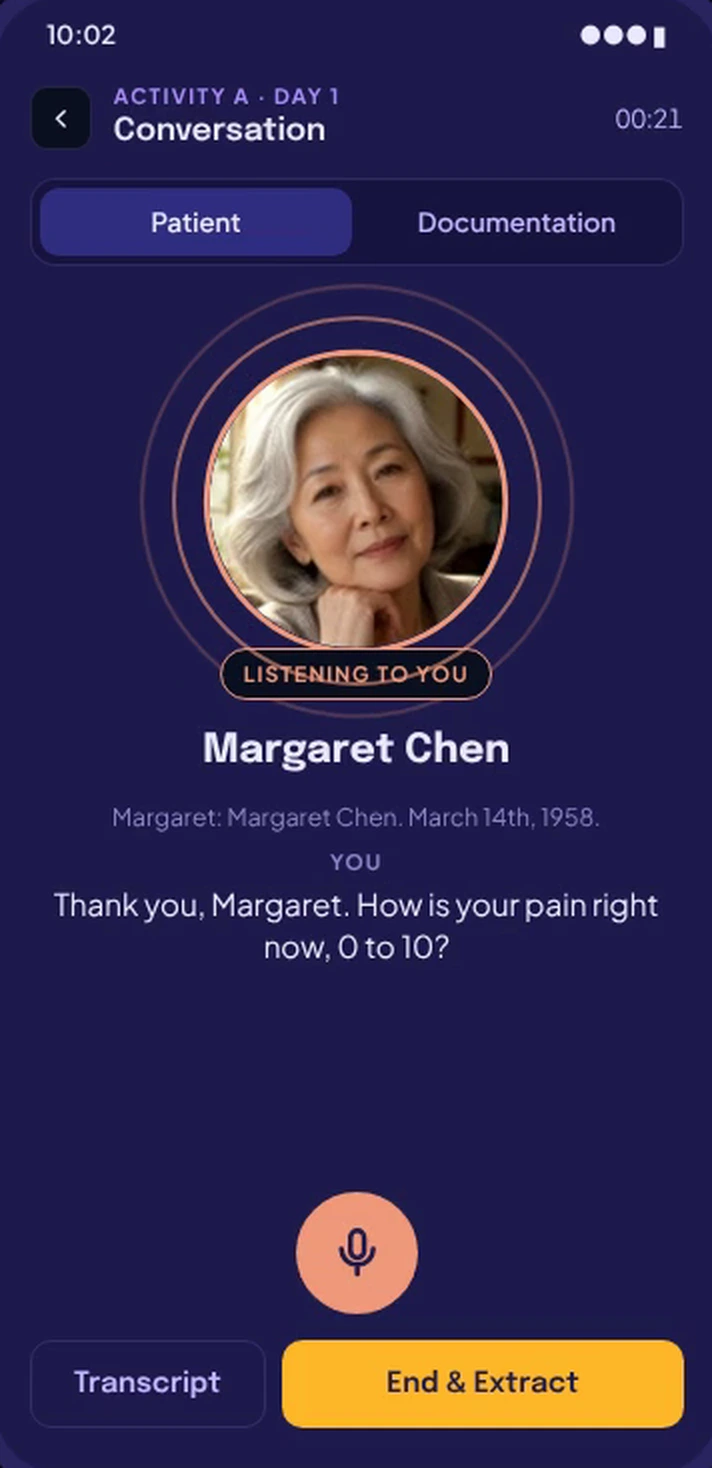
From the faculty assignment to the voice encounter to the cohort view, in under 90 seconds.
New faculty often inherit a course with little orientation and no time to build cases, tools and rubrics before the term starts.
Nursing faculty workload keeps growing: larger cohorts, limited lab space, scarce placements, office hours and paperwork all compete for the same hours.
With placements short, faculty are expected to build simulated experiences that develop clinical reasoning and communication.
Hospital professional development educators face the same pressures. Source: Aldhafeeri & Alanazi (2024), BMC Nursing 23, 506. Read the study.
Nurse testers are shaping MiRA's design and clinical content. Here's what we heard and what we're building next.
Students complete encounters on their own. Faculty review scored results instead of observing every session.
The interface keeps getting easier to use. Next up: icons, visual cues, and color coding for faster reading at a glance.
Nurses asked for context before entering the room. We're adding handoff reports, orders, meds, and vitals to every scenario.
Richer two-way conversations, so nurses can ask follow-ups and assess the way they would at the bedside.
Nurse-shared med-surg workflows and U.S. lab units are shaping how MiRA fits into the day.
Students practice recognizing changes, reassessing, and responding as the scenario evolves. Browse the nursing simulation scenarios.
Spot early warning signs and act.
Fever persists after 48 hours, prompting reassessment.
Teach-back, discharge planning & care transition.
Conversation
What faculty see
How each encounter maps to clinical judgment simulation
Conversation
What faculty see
Conversation
What faculty see
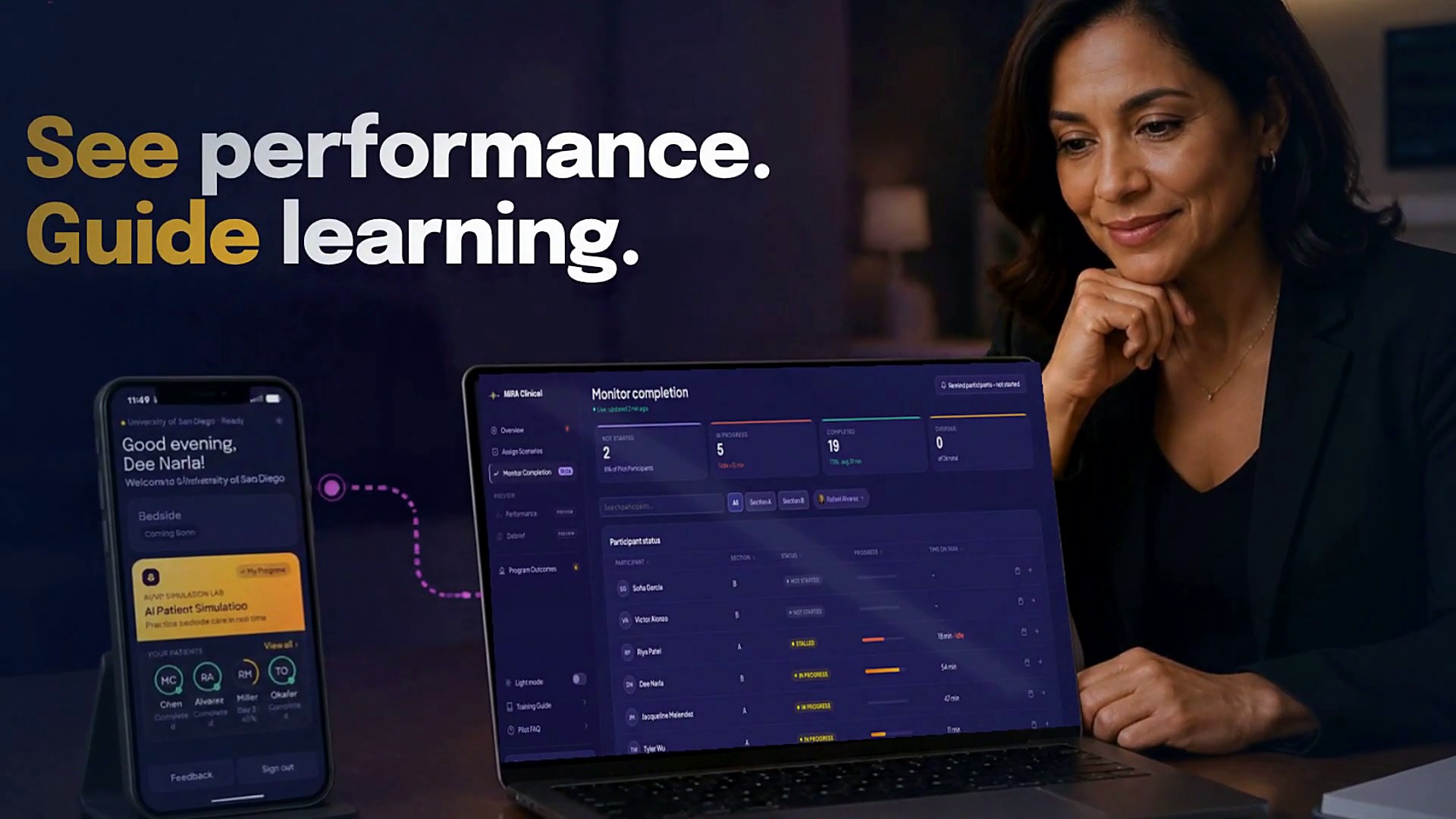
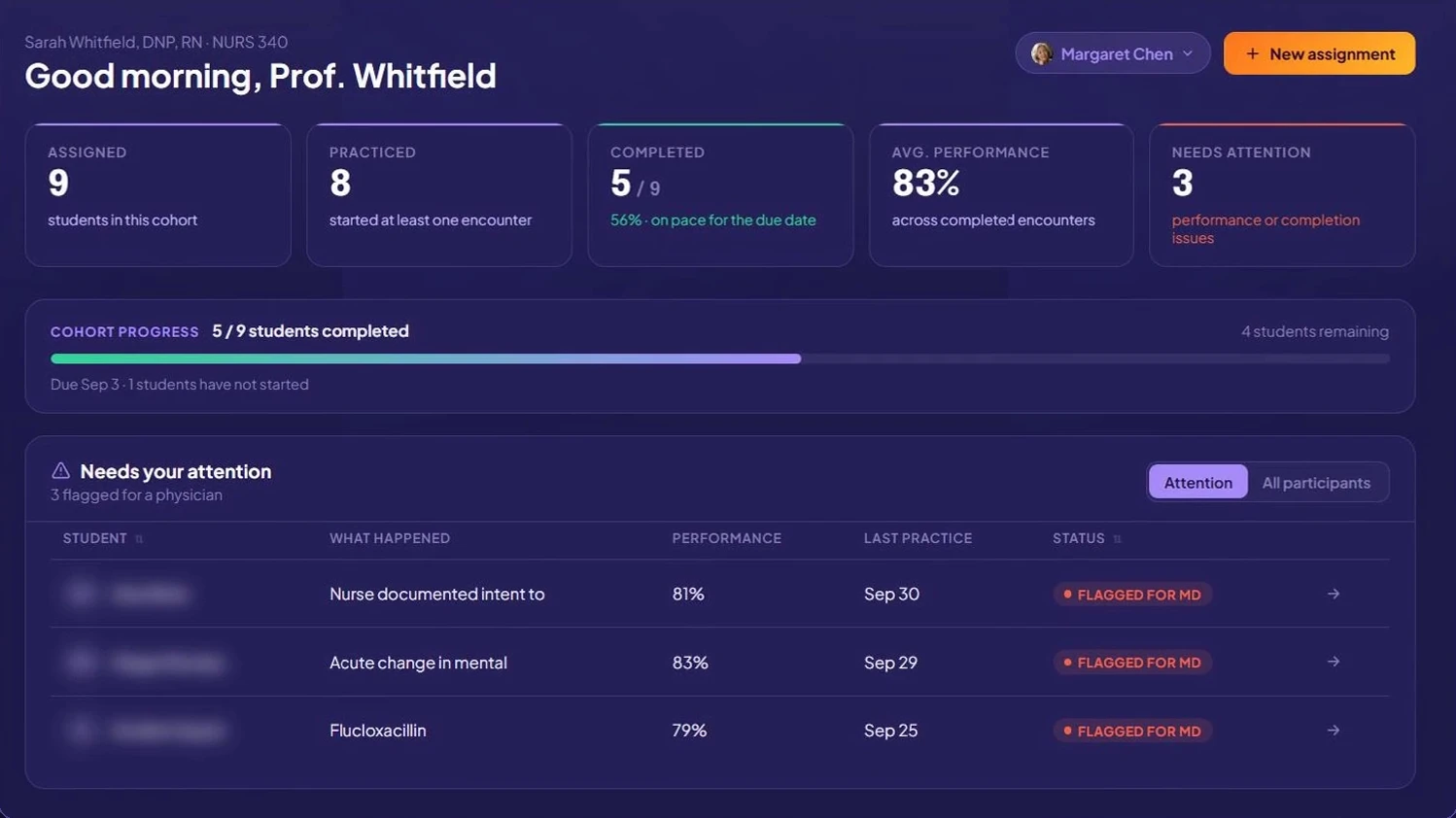
See everything in the nursing faculty simulation dashboard.
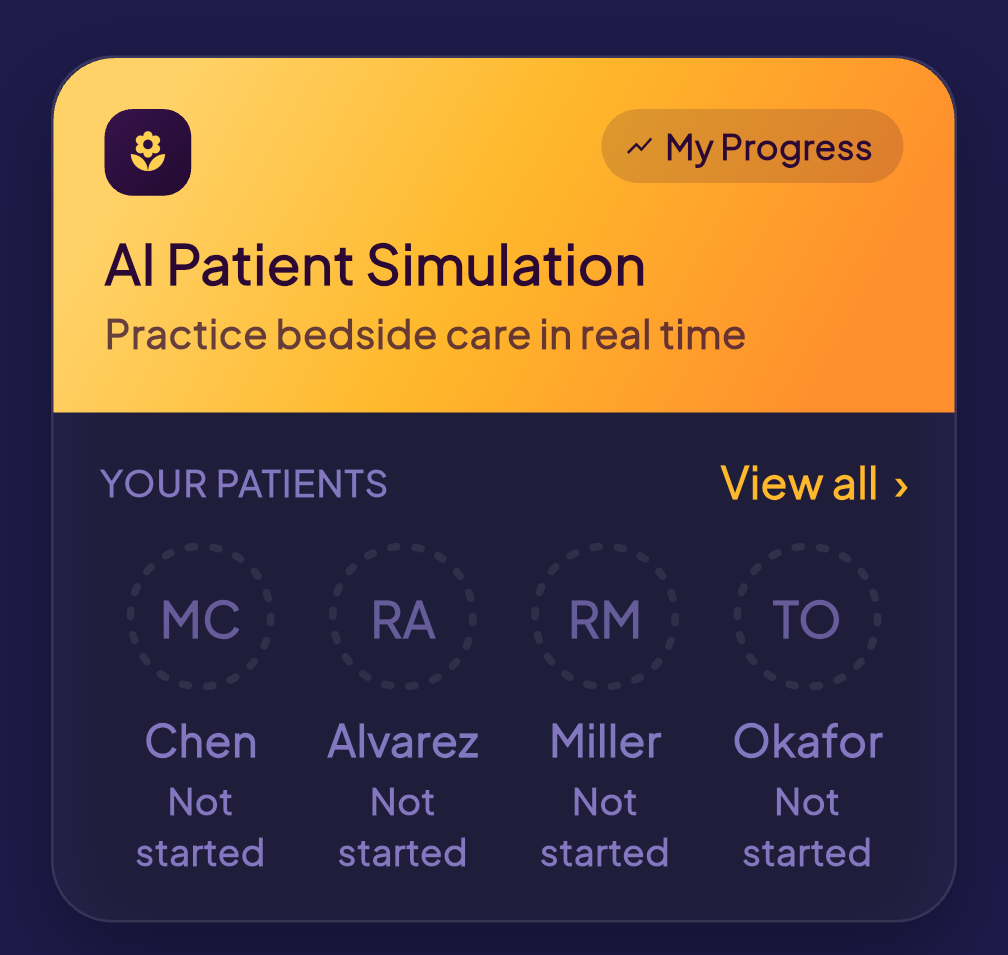
Pick cases per section and set due dates.
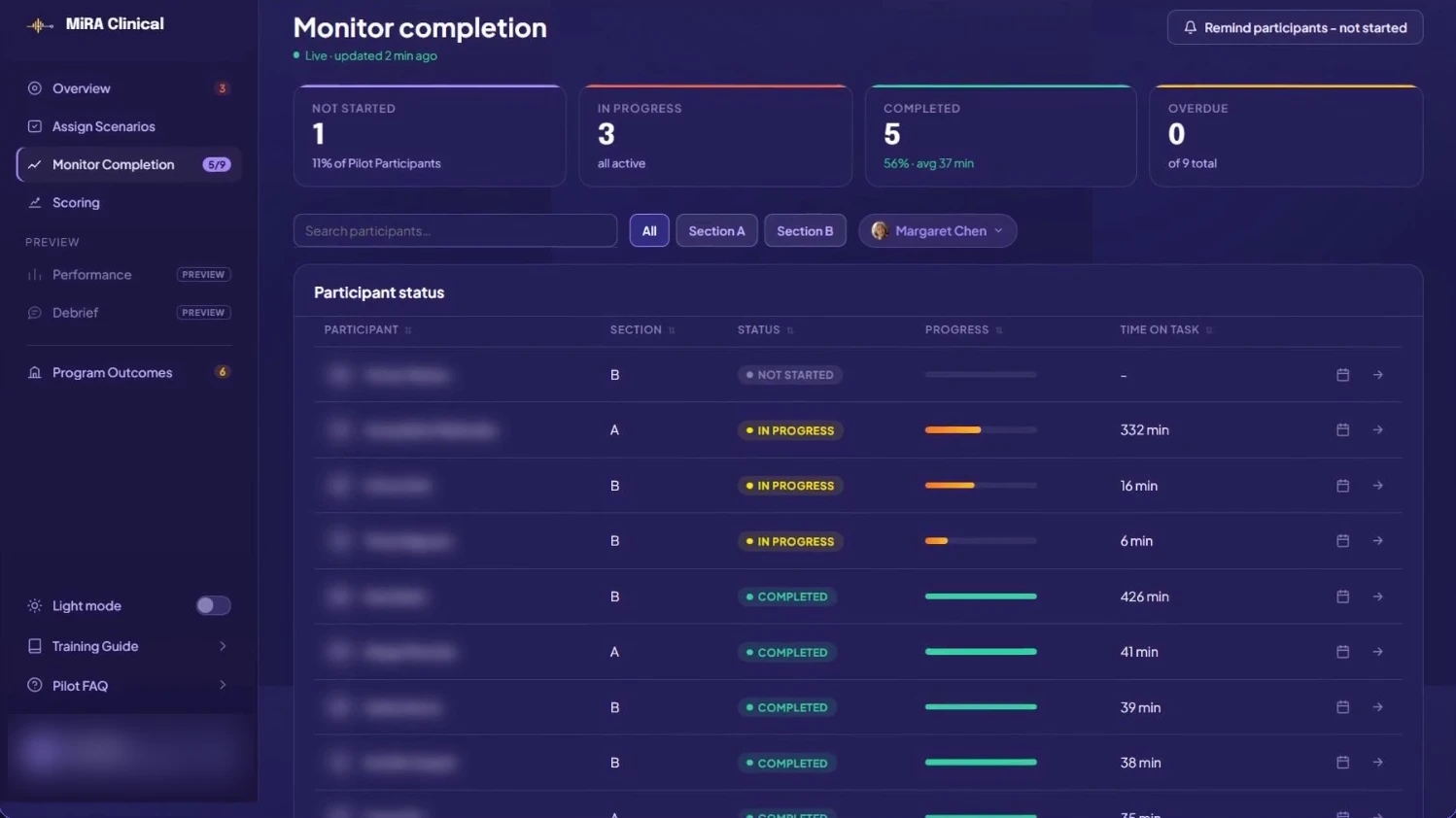
Live status and time on task for every student.
Cues, decisions and escalation timing across the cohort.
Student names are blurred. Performance views are in preview with pilot programs.
Designed with nurses
Scenario writing, review and testing, Jul to Aug 2026.
Across product testing and simulation use.
Aligned with the Next Generation NCLEX® framework, like recognizing cues and deciding when to escalate, with live AI patients. See the clinical judgment model mapping.
Scenarios can be designed around relevant AACN Essentials domains, including Person-Centered Care, Quality and Safety, and Interprofessional Partnerships.
Encounters are designed with the Healthcare Simulation Standards of Best Practice™ in mind, including defined objectives, in-scenario guidance, and structured debriefing.
MiRA is designed to support FERPA-aligned handling of student data, with access and data governance considered throughout the AI pipeline.
See the standards crosswalk behind scoring
NCLEX® and Next Generation NCLEX® are registered trademarks of NCSBN. Healthcare Simulation Standards of Best Practice™ is a trademark of INACSL. MiRA Clinical is not affiliated with or endorsed by NCSBN, AACN, or INACSL.
Students repeat cases as often as they need, outside lab and facility hours, with no risk to a patient.
Every student meets the same patient, objectives and rubric, across sections and campuses.
Grow the cohort without growing the hours faculty spend observing and scoring. See the faculty dashboard.
New patients, new specialties and updates as practice standards change. Coming next: chest pain, fall risk and respiratory distress. Browse scenarios.
A 30-minute walkthrough using a patient case aligned with your curriculum.
Request a demo